Pest control services Corpus Christi homeowners require must withstand extreme subtropical humidity, high water tables, and persistent salt spray. Properties near Oso Bay, Corpus Christi Bay, and the Gulf coastline face relentless biological pressure from subterranean termites, American cockroaches, and invasive rodents that bypass standard inland extermination methods.

Pest control services company in Corpus Christi is a specialized structural defense provider that eliminates wood-destroying organisms, disease-vector insects, and nuisance wildlife from coastal residential and commercial properties.
Every service reflects the same meticulous attention to detail, whether it's a single job or a larger pest control services project across Corpus Christi.
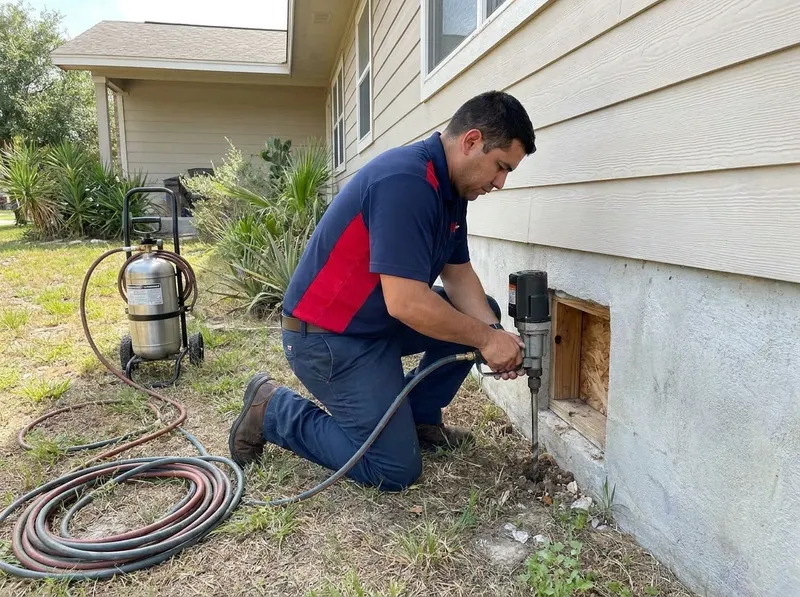
Subterranean termite defense in Corpus Christi utilizes deep-soil liquid trenching and perimeter bait station installations around monolithic concrete slabs. Treatments target aggressive Formosan and Eastern subterranean colonies that exploit foundation settlement fractures, cold joints, and plumbing pipe penetrations during seasonal spring swarms. Soil applications introduce non-repellent termiticides that foraging worker termites transfer through grooming behaviors directly to the subterranean reproductive queen, completely dismantling the colony structure within 60 to 90 days. Technicians drill through adjoining concrete patios and garage expansion joints where necessary, ensuring a continuous vertical chemical envelope that seals vulnerable access points without disrupting structural integrity.
Get a quote →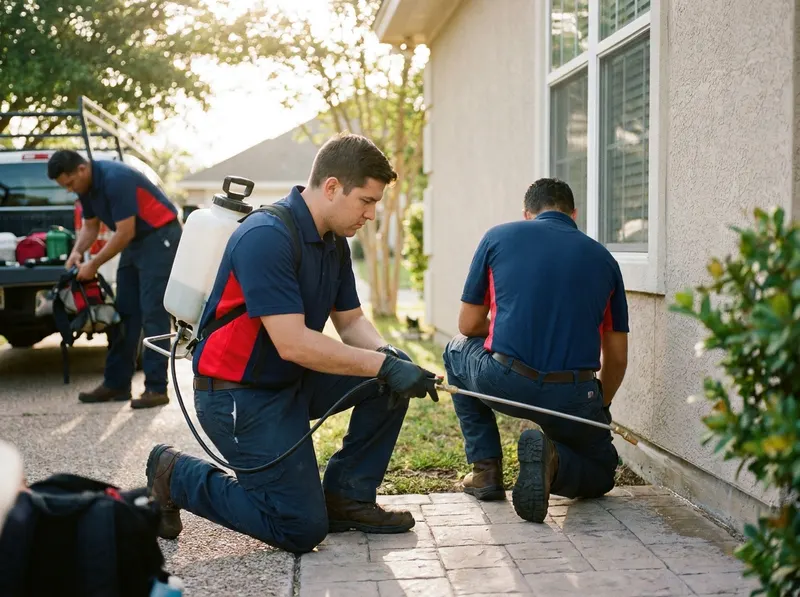
Cockroach barrier management targets American cockroaches, smoky brown roaches, and invasive German cockroach infestations using microencapsulated residuals and juvenile hormone mimics. Applications focus on exterior foundation weep holes, plumbing conduits, sub-floor crawlspaces, and humid sub-slab entry paths influenced by coastal weather. Exterior foundation perimeters receive a three-foot vertical and horizontal protective band of water-insoluble chemistries engineered to withstand high UV radiation and intermittent Gulf rain squalls. Interior plumbing penetrations under sinks and behind laundry walls receive targeted inorganic boric or silica desiccant dustings to neutralize pests nesting in wall voids without releasing aerosolized chemicals into living areas.
Get a quote →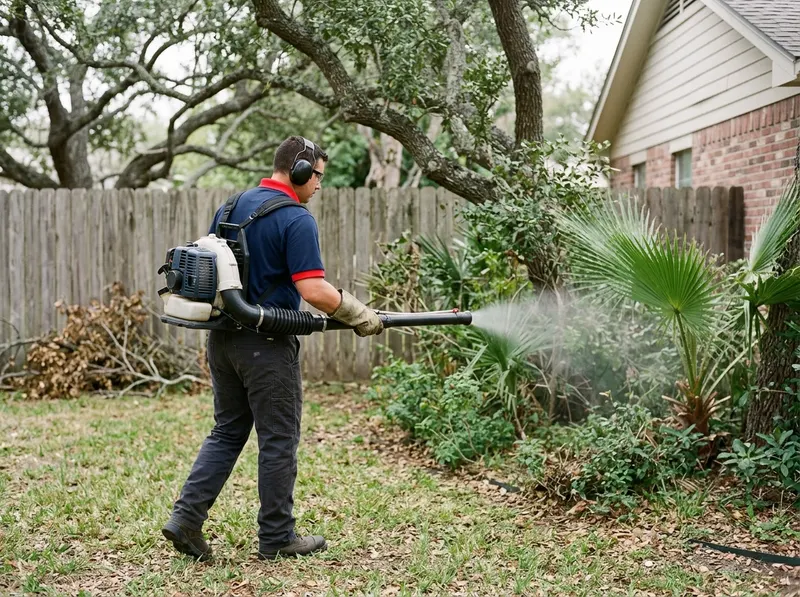
Coastal mosquito suppression employs targeted ultra-low volume backpack misting, dense foliage residual applications, and biological larvicide dunks in non-draining standing water catchments. Treatments suppress Aedes aegypti, Culex quinquefasciatus, and salt-marsh mosquito breeding cycles across residential and commercial properties near bayous, drainage easements, and shoreline inlets. Technicians map wind patterns and shade canopies, focusing residual mist treatments on the undersides of broadleaf plants, protected porch overhangs, and perimeter fence lines where mosquitoes rest during daytime heat. Monthly applications between April and October drastically decrease biting pressures and reduce exposure to mosquito-borne pathogens like West Nile and Saint Louis encephalitis.
Get a quote →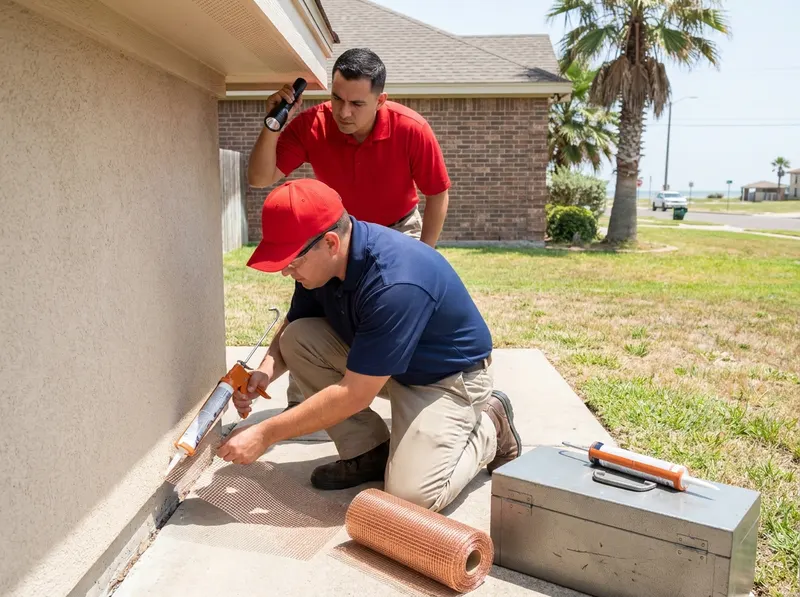
Rodent exclusion secures residential rooflines, soffits, crawlspace vents, and foundation conduits against invasive roof rats and house mice. Service incorporates rigid 1/4-inch galvanized hardware cloth installation, fire-retardant structural foam, copper mesh stuffing, interior mechanical trapping arrays, and exterior tamper-resistant baiting stations secured along perimeter property fencing. Corpus Christi coastal tree canopies provide roof rats elevated access paths to tile, metal, and composition shingle roofs, enabling them to compress through gaps as small as a nickel. Trapping cycles remain active inside attic spaces until zero daily activity is verified, followed by sanitation of localized droppings and replacement of contaminated insulation.
Get a quote →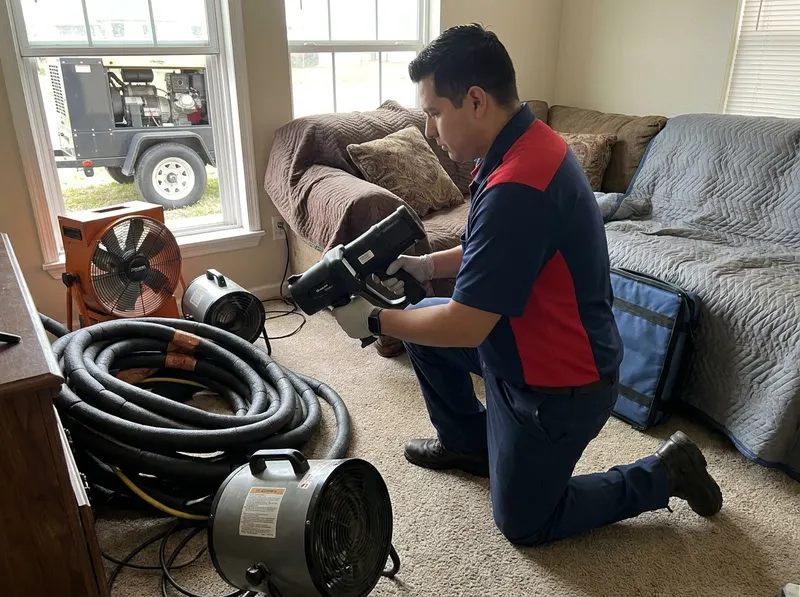
Bed bug thermal elimination raises structural temperatures to a lethal range between 120°F and 135°F using industrial high-BTU convective heaters, specialized thermal ducting, and high-output directional air movers. This single-day non-chemical remediation process penetrates deep into mattresses, box springs, upholstered headboards, baseboard interfaces, and interior wall cavities to neutralize bed bugs and their microscopic eggs in one treatment. Calibrated real-time wireless temperature sensors monitor heat penetration in every zone to prevent cold spots and protect heat-sensitive electronics. Following heat soaking, residual desiccant dusts are injected into electrical switch boxes and perimeter cracks to establish long-term protection against accidental reintroduction.
Get a quote →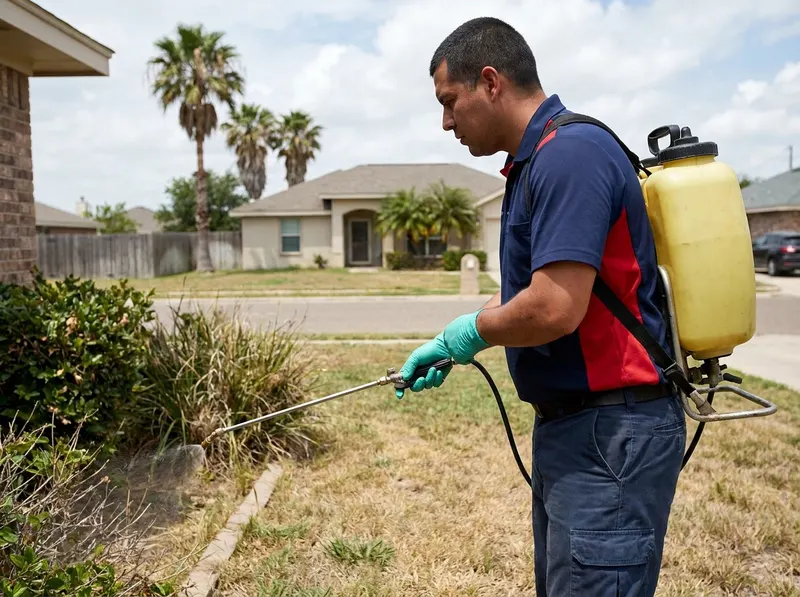
Exterior flea and tick suppression treats sandy coastal soils, turfgrass perimeters, and shaded pet resting zones with specialized residual insect growth regulators and microencapsulated adulticides. Treatments eliminate biting ectoparasites driven by warm South Texas coastal temperatures before expansive populations migrate into home interiors, crawlspaces, or carpeting. Ground sprays target transition zones between manicured lawns and wild coastal scrub where brown dog ticks and cat fleas harbor on wildlife hosts such as opossums and raccoons. Follow-up granular treatments penetrate thick Saint Augustine grass canopies, reaching the soil surface to kill hatching larvae and disrupting lifecycle development for up to two full months.
Get a quote →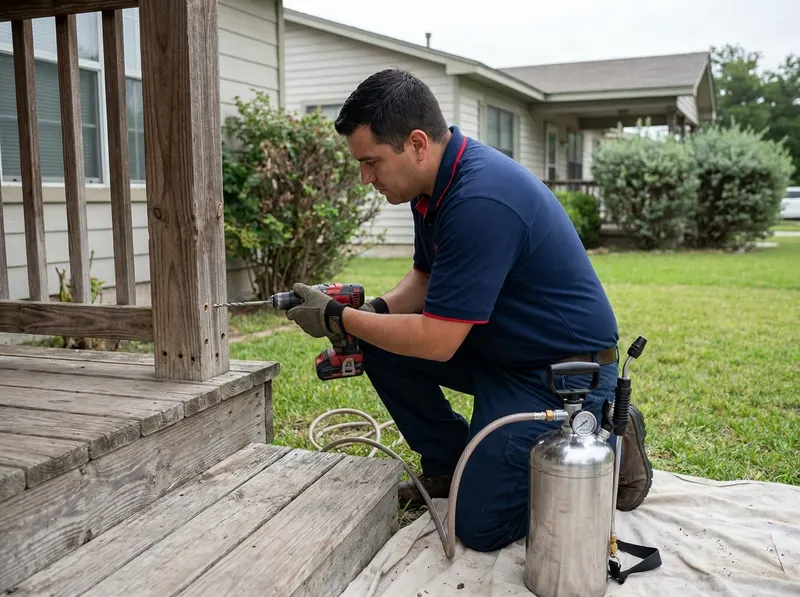
Drywood termite targeted elimination focuses on exposed framing, rafters, fascia boards, window framing, and coastal wood decking showing characteristic fecal pellet frass deposits. Localized remediation utilizes deep-penetrating borate-based wood injections, fiber-optic gallery mapping, and specialized desiccant dust formulations applied directly into active structural galleries. Because drywood termites require no ground contact and extract moisture directly from the humid coastal air, technicians perform thorough inspections of exterior soffits, exposed attic trusses, and decorative pergolas. Direct gallery micro-injection targets localized colonies quickly, saving property owners the substantial expense, logistical evacuation, and landscape damage associated with whole-structure tent fumigation.
Get a quote →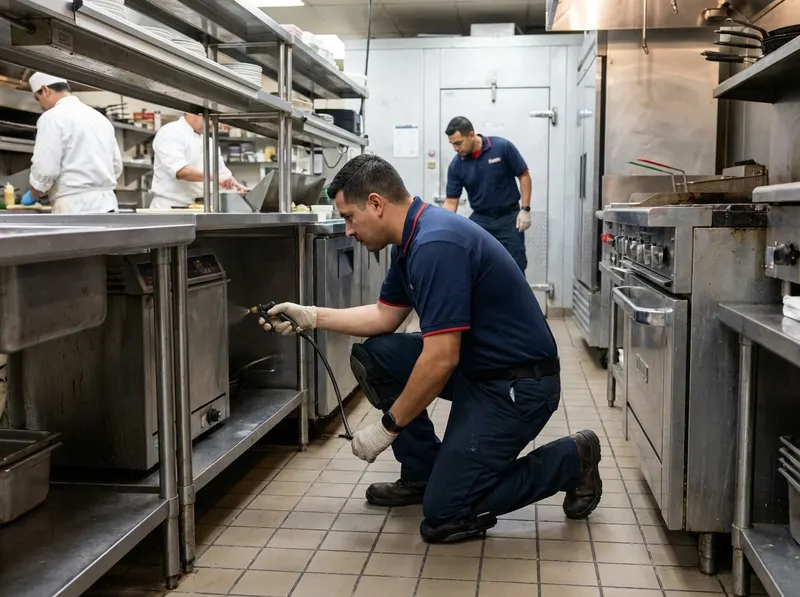
Commercial kitchen pest management provides strict regulatory compliance protocols targeting German cockroaches, fruit flies, drain flies, and stored-product beetles in food service facilities across Nueces County. Protocols use targeted non-volatile gel baits, insect growth regulators, drain microbial bio-foams, and discreet sticky monitoring boards placed according to Integrated Pest Management principles. Technicians clean biological organic sludge from commercial floor drains and grease traps where flies reproduce, preventing recurring infestations that violate local health inspections. Detailed digital trend logs, floor plan pesticide placement maps, and documented sanitation advisories support internal auditing and ensure seamless compliance with health department sanitation standards.
Get a quote →You get a firm, itemized quote for your pest control services before any work begins, no surprises, no pressure.
Careful prep, tidy work, and a full cleanup when we are done. We treat your home and belongings like our own.
The same trusted, background-checked team from the first call to the final check.
Selecting structural treatment in Nueces County requires matching the application methodology directly to the pest species, construction architecture, and environmental exposure. If subterranean termites threaten a monolithic concrete slab foundation in Calallen or Annaville, liquid perimeter trenching with non-repellent termiticides creates an undetectable continuous chemical barrier beneath the soil, whereas subterranean baiting systems offer low-impact perimeter monitoring without invasive trenching along decorative patios; the operational trade-off is that liquid termiticides provide an immediate, continuous subterranean boundary engineered to endure up to ten years in undisturbed soils, whereas bait stations require recurring visual inspections every 90 to 180 days to replace consumed cellulose attractant matrixes. If American cockroaches, commonly known as palmetto bugs, enter living spaces near Bay Area or Lamar Park, exterior perimeter microencapsulated barrier bands combined with dry wall-void attic dusting neutralize harborage sites before insects penetrate brick weep holes; relying strictly on interior baseboard aerosol treatments provides short-term surface knockdown of active bugs but leaves the primary exterior nesting reservoirs completely intact along foundation mulch beds, palm skirts, and municipal utility vaults.
If roof rats or marsh rodents infest attics near Cayo del Oso or Mustang Island, permanent mechanical exclusion paired with high-density interior snap-trapping eliminates the nesting colony without introducing volatile carcass decomposition hazards; chemical rodenticide baits placed in exterior tamper-resistant stations suppress incoming outdoor foraging populations, though utilizing interior poison carries the distinct trade-off of poisoned rodents expiring inside inaccessible wall voids or ceiling joists, generating severe biohazard odor contamination in South Texas summer heat. If German cockroaches infest kitchen cabinet hinges and appliance motors in multi-family units or restaurant galleys, precise targeted insect growth regulator gel placements systematically break the reproductive cycle without airborne chemical drift, whereas broad-spectrum indoor aerosol fogging simply scatters gravid female roaches deeper into wall cavities and neighboring rooms. When combating salt-marsh mosquitoes and biting midges in landscape foliage across Flour Bluff, localized residual misting of dense shrubbery understories suppresses adult resting sites, while treating non-draining standing water with biological Bacillus thuringiensis israelensis dunks prevents aquatic larval development without impacting non-target wildlife or native coastal vegetation.
Every project gets a firm, written price after a free on-site visit. Ranges below for orientation.
Tell us about your pest control services job and we'll send a clear, written quote, usually the same day. Or just call and talk to a real Corpus Christi pro.
(361) 600-6380
Corpus Christi features an unforgiving mix of hypersaline bay breezes, shallow coastal water tables, and expansive Beaumont clay formations that swell significantly during damp conditions and shrink deeply during drought intervals. This persistent ground movement exerts hydraulic pressure on residential concrete foundations, frequently cracking monolithic slabs, dislodging plumbing seals, and separating exterior brick expansion joints across neighborhoods from Lamar Park to Annaville. Subterranean termites, specifically aggressive Formosan colonies, systematically exploit these micro-fractures, building protective mud shelter tubes inside structural wall voids long before exterior signs become apparent. Properties in low-elevation coastal zones such as Flour Bluff, North Beach, and Mustang Island encounter supplementary biological pressure from salt-marsh mosquitoes breeding in tidally influenced standing water and American cockroaches thriving in coastal palm leaf litter. The airborne salt spray carried off Corpus Christi Bay accelerates the chemical degradation of standard, consumer-grade pest products, causing standard liquid formulas to break down within two to three weeks of application. Maintaining durable defensive barriers along the Gulf Coast requires non-repellent microencapsulated chemical formulations designed to withstand intense ultraviolet degradation and salt corrosion, integrated with heavy-gauge galvanized copper and steel exclusion screens that physically barricade exterior slab weep holes against persistent insect and rodent migration.
Free estimates for Corpus Christi & the surrounding area.
 Evorin Pest Patrol