Corpus Christi's subtropical barrier-island climate accelerates insect lifecycles, turning coastal pooling into active breeding zones within 7 days of rain. Dense salt air, low-lying water tables near Cayo del Oso, and…
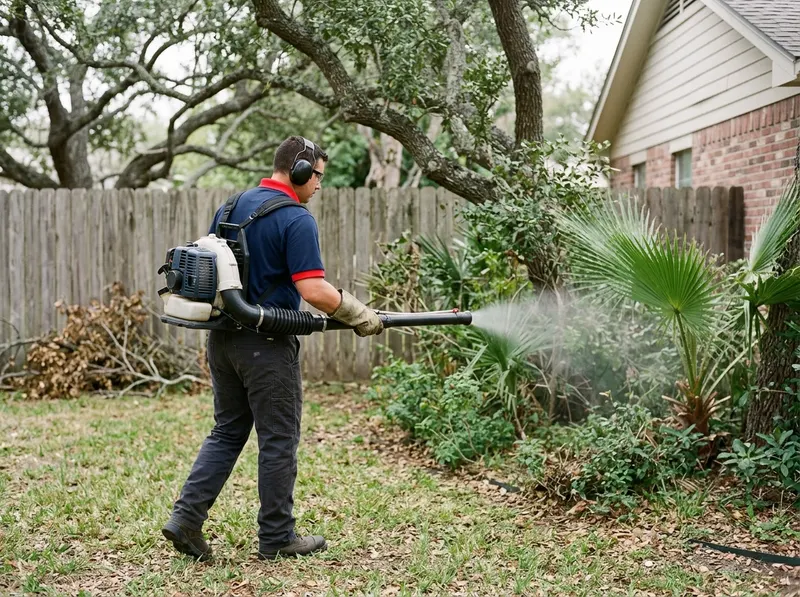
Corpus Christi's subtropical barrier-island climate accelerates insect lifecycles, turning coastal pooling into active breeding zones within 7 days of rain. Dense salt air, low-lying water tables near Cayo del Oso, and sudden Gulf downpours create ideal conditions for Aedes species to colonize residential perimeters. While store-bought propane traps or topical sprays disperse quickly in high-salinity maritime breezes, an anchored barrier treatment binds residual micro-encapsulated compounds to the underside of broad-leaf flora, deck joists, and soffits. This targeted foliar application suppresses adult resting zones on contact, while water-safe bacterial larvicide treatments (Bacillus thuringiensis israelensis) eliminate immature vectors in low spots before emergence.
Decision fit depends directly on property size, airflow exposure, and standing-water dynamics. Standard synthetic barrier misting fits residential lots in Bay Area, Lamar Park, and Del Mar where shaded landscape beds shelter adult swarms during midday heat. Conversely, windswept beachfront homes along Mustang Island or low canal borders in Flour Bluff encounter continuous tidal infiltration. For these perimeter profiles, backpack misting must pair with direct non-flowing water treatments around ditch culverts and storm drains; the trade-off is that heavy Gulf wind requires precise perimeter application beneath subfloors and within shaded windbreaks rather than open-air broadcast spraying.
Treatment execution follows three distinct procedural stages: 1. A physical perimeter audit identifies hidden pooling water in downspout splash blocks, air conditioner condensation pans, and shaded landscaping. 2. Technicians deploy targeted backpack mist blowers applying micro-encapsulated adulticide directly to leaf undersides, fence spans, and under-patio voids up to 10 feet high. 3. Slow-release larvicide rings are placed into permanent drainage ditches, French drains, and landscape low points to disrupt egg emergence for up to 30 continuous days without disrupting local run-off systems near Oso Bay or the Corpus Christi Ship Channel.
Every job gets a firm, written price after a free on-site visit.
Tell us about your mosquito reduction treatment job in Corpus Christi and we'll send a clear, written quote, usually the same day.
 Evorin Pest Patrol