Thermal treatment serves properties where chemical sprays fail due to pesticide-resistant bed bug populations. Traditional chemical treatments require 3 to 4 sequential applications over 6 weeks and do not reliably…
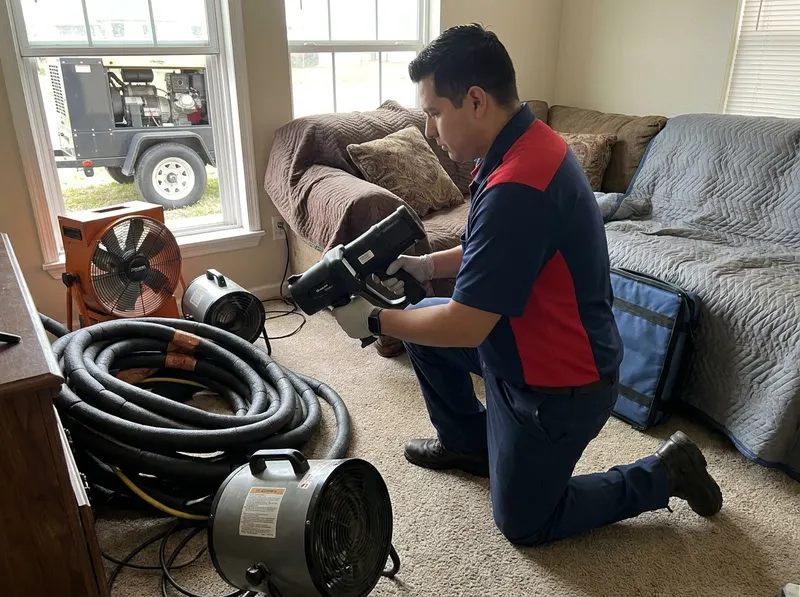
Thermal treatment serves properties where chemical sprays fail due to pesticide-resistant bed bug populations. Traditional chemical treatments require 3 to 4 sequential applications over 6 weeks and do not reliably penetrate the outer casing of bed bug eggs. In contrast, convective heat circulating at 122°F denatures the cellular proteins of bed bugs across every life stage, egg, nymph, and adult, within 90 minutes of contact. A thermal remediation plan suits occupied family residences, multi-family units, and Mustang Island short-term rentals that require immediate turnaround. The operational trade-off centers on pre-treatment preparation: occupants must temporarily remove heat-sensitive items, including wax candles, pressurized canisters, oil paintings, and medications, before thermal equipment activates.
Coastal humidity and high turnover rates across Nueces County create distinct pest transmission vectors. In coastal properties near North Beach, Mustang Island, and South Shore, high relative humidity prevents structural materials from drying out quickly, which allows bed bugs to survive longer off-host in wall voids and under subflooring. In established inland neighborhoods like Lamar Park, Del Mar, and Bay Area, older pier-and-beam foundations require industrial thermal fans to drive heated air into crawl-space thresholds and baseboards. Technicians position temperature probes inside wall cavities and dense furniture cushions to ensure the core temperature reaches the 120°F lethal threshold, accounting for salt-air drafts along the Cayo del Oso shoreline and the open corridors of Ward Island multi-family complexes.
Preparation follows a standardized protocol to protect personal assets while ensuring lethal penetration. Residents drain waterbeds, remove acoustic instruments, unplug delicate electronics, and store aerosol cans off-site. Technicians place high-output electric or indirect-fired heaters outside or in central corridors, routing ductwork directly into infested rooms. Air movers circulate convective thermal currents continuously for 4 to 6 hours once target temperatures are achieved. For properties in Calallen, Flour Bluff, and Annaville, exterior environmental barriers are checked during the cool-down process to prevent re-entry from perimeter structures. Every inspection is handled by local technicians without national call-center routing or mandatory recurring service contracts.
Every job gets a firm, written price after a free on-site visit.
Tell us about your bed bug heat remediation job in Corpus Christi and we'll send a clear, written quote, usually the same day.
 Evorin Pest Patrol